The New Space Weather: MICMAC!
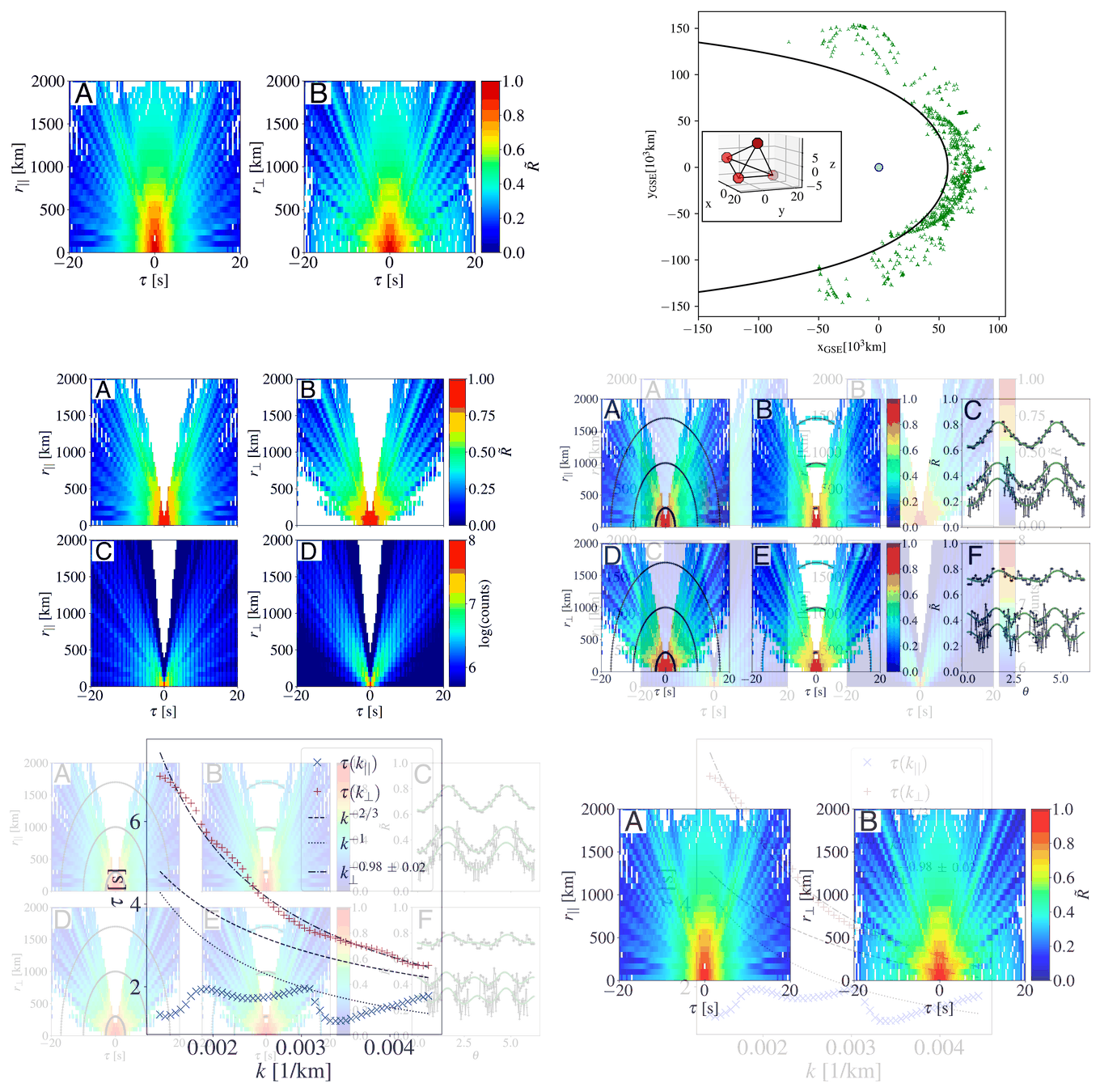
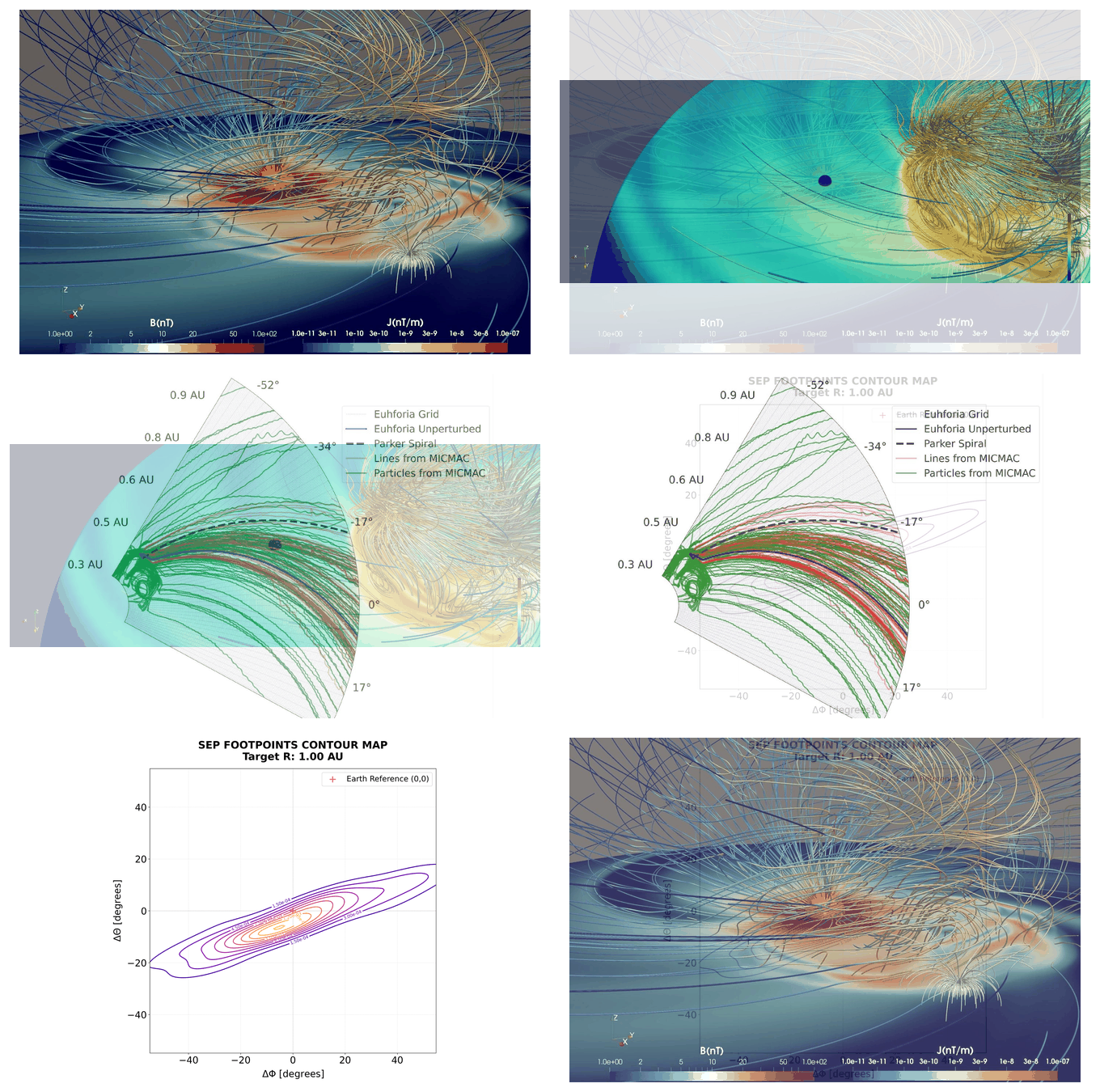
Space weather models describe coronal mass ejections with large-scale magnetohydrodynamics, but the turbulence that scatters magnetic field lines and energetic particles lives at much smaller scales. MICMAC bridges the two: it couples a MICroscopic model of turbulent diffusion with MACroscopic EUHFORIA simulations.
Applied to the extreme CME of November 2021, MICMAC follows magnetic field lines and 100 MeV protons from the CME-driven shock out to 1 AU. Turbulence broadens and distorts the magnetic connection between the CME and Earth: the footpoints become non-Gaussian, anisotropic and patchy, more and more as the CME approaches Earth. A simple shear-layer model traces the anisotropy back to the geometry of local current sheets. The message for forecasters is clear: CME structures and ambient turbulence must be modelled together.
A. Ippolito, G. Prete, N. Wijsen, G. Zimbardo, A. Maharana, S. Poedts, and S. Servidio, On the Effect of Large Scale Structures and Turbulence on Solar Eruptive Events: The Cross-Scale Challenge for Space Weather, The Astrophysical Journal Letters, in press (2026)